🌟 Teacher Spotlight: Creativity in Action
This month, we’re shining the spotlight on one of the wonderful educators in our Art in Action community. We had the pleasure of attending her school’s art show and loved seeing the joy and creativity in her students’ work. We asked her a few questions about teaching art and her experience with Art in Action. We hope you enjoy getting to know her and celebrating all she brings to her students.
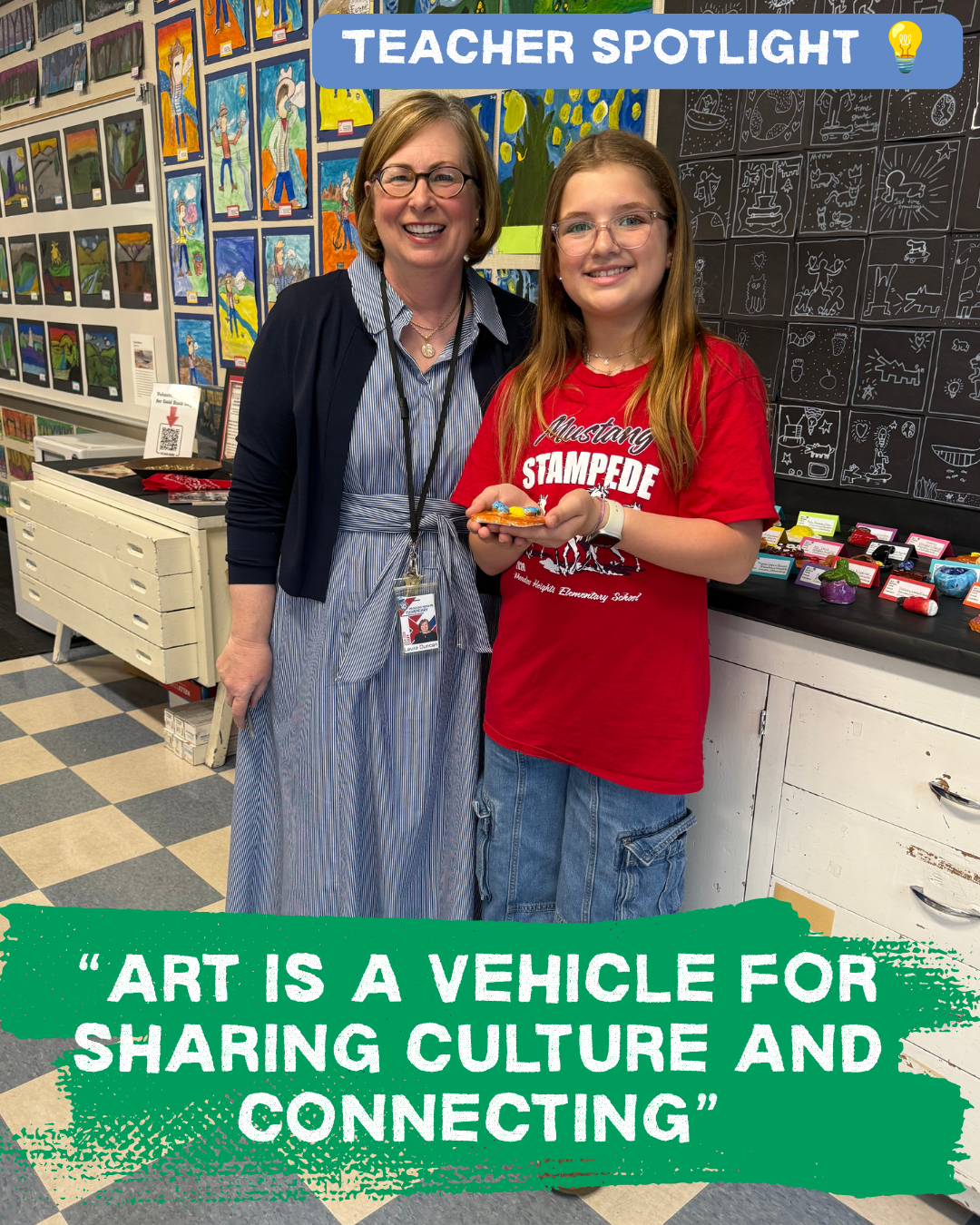
Laura Duncan, Meadow Heights Elementary School, CA
How long have you been teaching art?
Short answer: A long time!
Long answer: I began my career as an elementary school teacher in 1992. Within my second and third grade classrooms I always enjoyed teaching art, which had been one of my majors in college. In 1998 I brought the Art in Action program to my school where I taught it, and coordinated parent docents for other classes. When my own children started school in 2008 I did the same at their school- Meadow Heights- as a volunteer... When they both graduated from MH in 2016, I became the professional art teacher there instructing all our classes. So I guess I have been “just” an art teacher for 10 years.
What do you enjoy most about it?
I have 3 favorites-
Sharing my love for art and art history with my students, staff, and parent community.
Seeing how each child brings their unique response to every project.
Seeing my student artists grow from TK tots to graduating 5th graders.
What do you enjoy most about using the Art in Action program with your students?
I love that Art in Action lessons always begin with a major masterpiece- and that the student projects based upon them still give opportunities for children to add their own creativity and share their own artistic voice.
Is there a particular lesson or project from the program that has become a favorite in
your classroom? What makes it special?
It’s hard as I have LOTS of favorites... but I think if I could only pick one it would be Claes Oldenburg’s Two Cheese Burgers with Everything. I am fortunate to have a kiln and access to real clay- and the kids love the clay more than anything else I give them. Oldenburg’s work, while humorous and joyful to behold, also makes poignant remarks and it’s a great way to teach art as social commentary. After learning such a powerful lesson, the kids then get to create their own food culminating all the clay construction skills pinch/pull/sculpt/coil/slab etc. It’s always the highlight of the art show!
Why do you think art is such an important part of a child’s education?
First of all, making original art is hard. It takes a lot of thought and decision making, so it’s way more of a challenge than it often gets credit for, and in that respect I think it’s great for overall cognitive development.
Art can be beautifully integrated with other subjects, expanding language, and enriching concepts from science, math, history and literature. I work hard with our staff to integrate art with their curriculum as much as I can. Art lets us expose children to other people and places and moments in history... it’s a vehicle for sharing culture and connecting which I find very rewarding. The longer I teach, the more I see art instruction’s value for mental health. There is something about art class that is reflective, and almost healing. It’s a break from screens and other academic pressures, and a chance to create with our hands and be absorbed in a happy process. The longer I teach art- and especially since returning to the art room after COVID- the more I see my main job to be spreading joy.
What advice would you give to someone who is just beginning to teach art or lead an
art program?
Give yourself grace.
The kids will love your project even if everything is not perfect.
Realize that art takes TIME to teach. I think it takes more time to teach than other subjects because it’s so hands-on. That said, I like to prep as much as I can. I like to learn about the artist, the pieces, the techniques and practice them myself. The more I do that, the more comfortable I am with the material and the better I do sharing it! Being organized with supplies, materials and processes also helps a ton too... and all of these things get better and better the longer you do it.
Favorite art medium: for teaching, tempera paint
Favorite color: always blue
Favorite quote: from Maya Angelou, “I’ve learned that people will forget what you said, and people will forget what you did, but people will never forget how you made them feel.”
Thank you, Laura, for your thoughtful and encouraging words. Your reflections are a wonderful reminder of how meaningful it is not only to experience art, but to be the teacher who helps students discover the joy of creating it.